
Nissan X Trail
Two generations on sale. The 3rd gen T32 is the value pick; the 4th gen T33 is the fresh-buy target.
Model strength
Tap any for details
Weighs every axis evenly. Changes the weighting, not the numbers.
▲ 2 axes vary by variant (price, running cost) — see variant pages.
Price by age
What does a car this age cost?
Generation timeline (aligned to chart)
| Age | Generation | Price range | Min. Down | Availability |
|---|---|---|---|---|
| 2y | 4th gen T33 | S$187k – S$180k | S$73k | Medium |
| 3y | 4th gen T33 | S$176k – S$171k | S$70k | Low |
| 6y | 3rd gen T32 | S$95k – S$87k | S$37k | Low |
| 8y | 3rd gen T32 | S$64k – S$44k | S$19k | Medium |
| 9y | 3rd gen T32 | S$36k – S$31k | S$13k | High |
| 10y | 3rd gen T32 | S$25k – S$21k | S$8k | Medium |
- Generation
- Tap a generation (↓) to jump to its full breakdown below; the colour maps back to the timeline strip + legend above.
- Price range
- P75 → P25 of asking — the middle half of listings at that age sits inside this band. Outliers above and below excluded.
- Down payment
- MAS Notice 642 LTV cap applied to the age's median asking: 30% when OMV is up to S$20k, 40% above. Max loan tenure 7 years. Rows marked * mix both OMV buckets — we display the conservative 40% figure so the quote never under-states what a luxury-OMV listing at that age would actually require.
- Availability
- High when this age's listing share is ≥1.5× the model's uniform expectation, low when ≤0.6×, medium otherwise. Model-relative, so an evenly-spread model lands all-medium.
Positioning vs segment
Where does Nissan X Trail sit?
13 scoreable mass-market SUVs · 50 more in segment lack enough listings to score
Nissan X Trail
this modelBrand reliability
70(−5 vs median 75)
Resale strength
10(−29 vs median 39)
Asking price falls ~34.7% per year
- Brand reliability
- Consumer-survey composite — JD Power · WhatCar · Consumer Reports. Same score for every variant of a given make.
- Resale strength
- 100 − 3× annualised tangible-decay (COE-stripped). Fitted from each variant's asking-price-by-age regression then averaged at model level.
- Peer set
- Every same-segment model with ≥5 active PARF listings whose variants fit a depreciation curve. Practicality isn't plotted — it's a body-shape constant within the segment, so it would be the same for every dot.
- Quadrants
- The crosshair marks the segment median on each axis. Top-right (Safe Bets) is strong on both; top-left (Hidden Gems) holds value above what the brand reputation suggests; bottom-right (Bargain Buys) is well-built but depreciates fast — buy cheap; bottom-left (High Risk) is soft on both.
Generation
4th gen T33 (2021-present) · Reg 2023–2024
Tap to collapseTap to expand
Generation
4th gen T33 (2021-present) · Reg 2023–2024
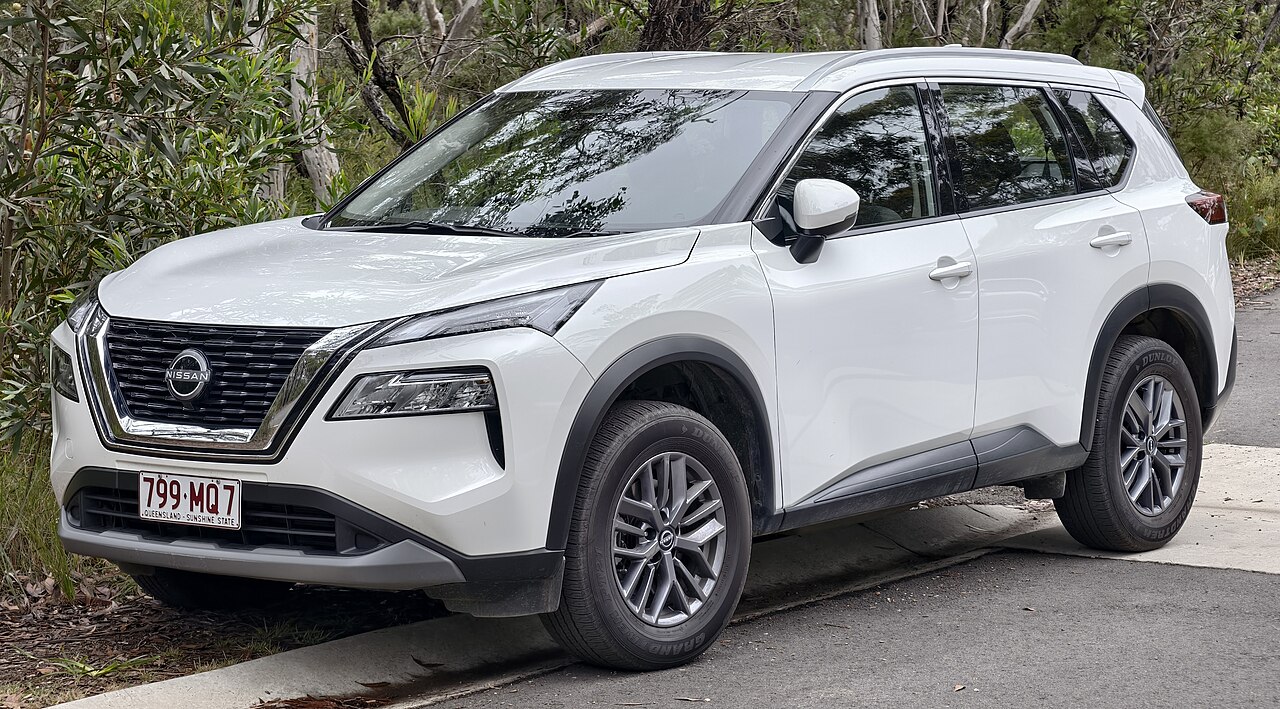
Generation overview
No curated buying call yet — read the stats and service book.
- Asking
- S$176k–182k
- Median
- S$180k
- Decay
- —
Trims in this generation
Pick a trim to see its score, deal target, and pre-purchase checklist.
Hybrid
1 trimGeneration
3rd gen T32 (2013-2022) · Reg 2015–2020
Tap to collapseTap to expand
Generation
3rd gen T32 (2013-2022) · Reg 2015–2020
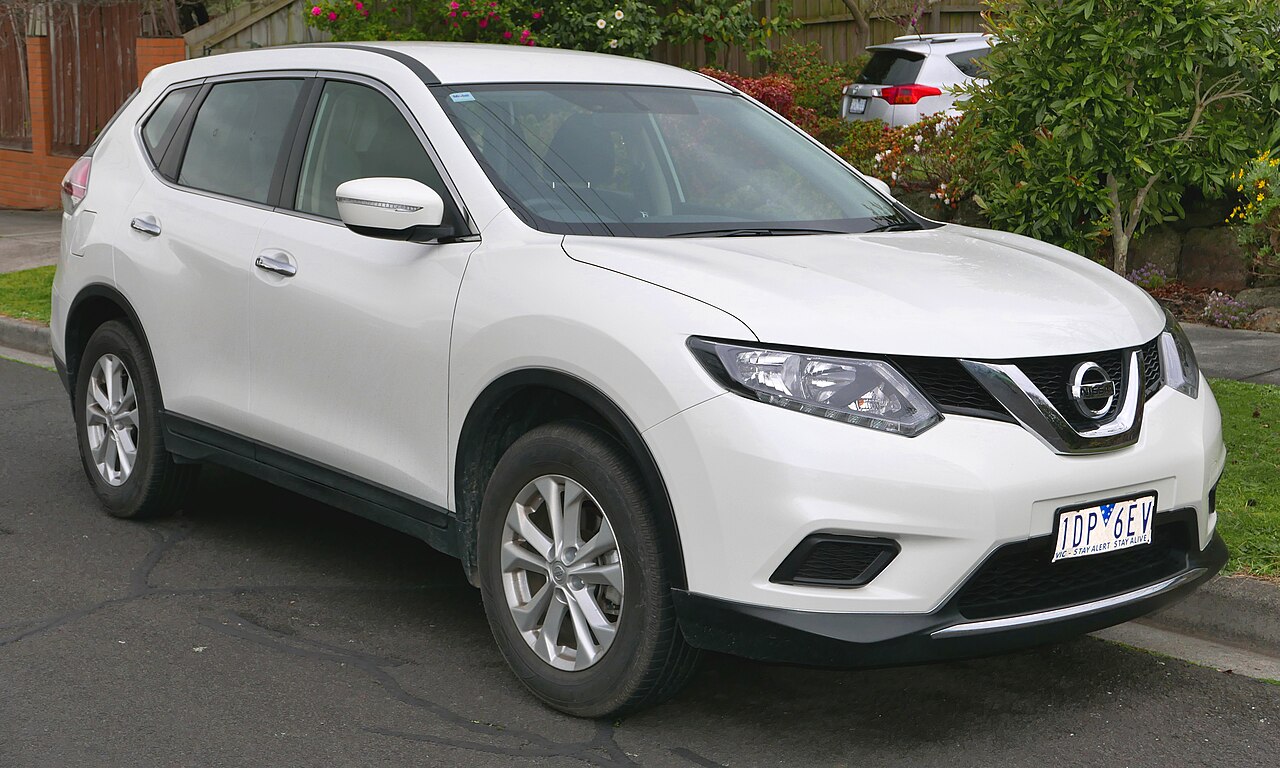
Verdict
The JATCO Xtronic CVT is the gen-defining concern — failures from 80-120k km on early builds, especially when fluid service was skipped. Nissan extended warranty to 10yr/160k km in some markets but SG parallel imports may not benefit. Pre-2017 cars are the densest failure cluster; 2017+ facelift improved calibration + cooling. MR20DE 2.0L NA + QR25DE 2.5L NA engines themselves are reliable Nissan family — chain stretch on some early builds, fuel-injector + stall-when-warm issues on 2.5L. ABS / ESP warning lights often a dodgy earth.
- Asking
- S$30k–47k
- Median
- S$36k
- Decay
- 31.8%/yr
What's good
- 2017+ facelift X-Trail with documented Xtronic CVT fluid service receipts — the facelift improved CVT calibration + cooling. Combined with 60k km fluid services, the failure-cluster pattern is materially reduced. The cleanest used buy on this gen.
- MR20DE 2.0L NA petrol with full service history — the boring durable Nissan engine. No chain stretch as much as the early QR25 cars; engine itself is one of the more reliable in the Nissan lineup.
What to watch
- Pre-2017 X-Trail with CVT shudder or whine on test drive — densest JATCO failure cluster window. CVT replacement is S$5-9k locally (significant share of car's residual). Walk unless heavily discounted with a quote in hand.
- A QR25DE 2.5L that stalls once it's warmed up — documented pattern on the 2.5L engine. Diagnose at viewing if the previous owner mentions any 'stalls when hot' behaviour; could be ECU, fuel injector, or sensor issue.
Trims in this generation
Pick a trim to see its score, deal target, and pre-purchase checklist.
Common questions about the Nissan X Trail
- How much does a used Nissan X Trail cost in Singapore?
- Most used Nissan X Trail on the market are around 9 years old, asking roughly S$31k–S$36k (typically about S$34k). That's the age with the widest choice — and the most sellers competing, so it's where you'll have the most room to bargain.
- How much does a used Nissan X Trail depreciate per year?
- A used Nissan X Trail loses value at a fairly steady pace — around 29% a year — with no real plateau. An older one costs less but keeps falling at much the same rate, so there's no single 'bargain age': buy on price and condition, not on timing.
- Is the Nissan X Trail reliable?
- In our read, the Nissan X Trail scores 70 out of 100 on brand reliability. That still varies by generation and how the individual car was looked after, so always check the service history before you commit.
- What should I expect to pay for a used Nissan X Trail with a given mileage?
- It depends on the exact variant, age and mileage — a higher-mileage car should ask less. Use the price modeller on this page to get a fair-price range for a specific age and mileage, so you know what to offer.
- Where do these Nissan X Trail figures come from?
- They're worked out from current used-Nissan X Trail listings in Singapore — asking prices, mileage and registration years — not past transaction prices. We refresh them regularly, and we flag thin data rather than guess.