
Toyota Alphard
Four generations on sale. The 1st gen AH10 is the value pick; the 3rd gen AH30 leads on resale; the 4th gen AH40 is the fresh-buy target.
Model strength
Tap any for details
Weighs every axis evenly. Changes the weighting, not the numbers.
▲ 2 axes vary by variant (price, running cost) — see variant pages.
Price by age
What does a car this age cost?
Generation timeline (aligned to chart)
| Age | Generation | Price range | Min. Down | Availability |
|---|---|---|---|---|
| 0y | 4th gen AH40 | S$300k – S$293k | S$117k | Low |
| 1y | 4th gen AH40 | S$316k – S$290k | S$121k | Medium |
| 2y | 4th gen AH40 | S$300k – S$289k | S$118k | Medium |
| 3y | 3rd gen AH30 | S$238k – S$209k | S$88k | High |
| 4y | 3rd gen AH30 | S$206k – S$191k | S$80k | High |
| 5y | 3rd gen AH30 | S$189k – S$170k | S$72k | Medium |
| 6y | 3rd gen AH30 | S$186k – S$155k | S$72k | Low |
| 7y | 3rd gen AH30 | S$140k – S$115k | S$50k | Medium |
| 8y | 3rd gen AH30 | S$115k – S$91k | S$38k | Medium |
| 9y | 3rd gen AH30 | S$68k – S$64k | S$26k | Low |
- Generation
- Tap a generation (↓) to jump to its full breakdown below; the colour maps back to the timeline strip + legend above.
- Price range
- P75 → P25 of asking — the middle half of listings at that age sits inside this band. Outliers above and below excluded.
- Down payment
- MAS Notice 642 LTV cap applied to the age's median asking: 30% when OMV is up to S$20k, 40% above. Max loan tenure 7 years. Rows marked * mix both OMV buckets — we display the conservative 40% figure so the quote never under-states what a luxury-OMV listing at that age would actually require.
- Availability
- High when this age's listing share is ≥1.5× the model's uniform expectation, low when ≤0.6×, medium otherwise. Model-relative, so an evenly-spread model lands all-medium.
Positioning vs segment
Where does Toyota Alphard sit?
7 scoreable mass-market MPVs · 21 more in segment lack enough listings to score
Toyota Alphard
this modelBrand reliability
90(+0 vs median 90)
Resale strength
73(+3 vs median 70)
Asking price falls ~9.0% per year
- Brand reliability
- Consumer-survey composite — JD Power · WhatCar · Consumer Reports. Same score for every variant of a given make.
- Resale strength
- 100 − 3× annualised tangible-decay (COE-stripped). Fitted from each variant's asking-price-by-age regression then averaged at model level.
- Peer set
- Every same-segment model with ≥5 active PARF listings whose variants fit a depreciation curve. Practicality isn't plotted — it's a body-shape constant within the segment, so it would be the same for every dot.
- Quadrants
- The crosshair marks the segment median on each axis. Top-right (Safe Bets) is strong on both; top-left (Hidden Gems) holds value above what the brand reputation suggests; bottom-right (Bargain Buys) is well-built but depreciates fast — buy cheap; bottom-left (High Risk) is soft on both.
Generation
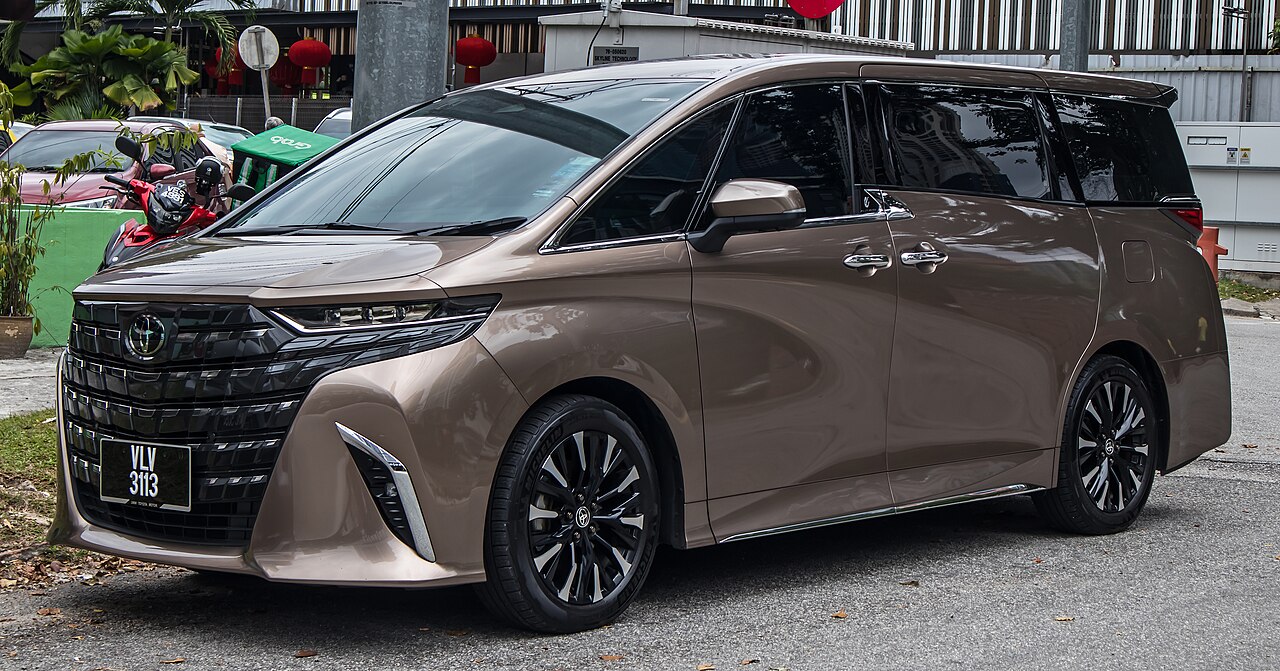
4th gen AH40 (2023-present) · Reg 2024–2026
Tap to collapseTap to expand
Generation
4th gen AH40 (2023-present) · Reg 2024–2026
Verdict
Brand-new platform — too early for a long-term reliability verdict. A25A 2.5L petrol + Toyota's THS hybrid carry over from the AH30 architecture (same engine families); transmission + powertrain risk profile is broadly inherited. As with any first-2-year build, watch for software refreshes in the service book + verify any recall paperwork via VIN. Power sliding doors remain the universal Alphard wear item across all generations. SG-context: most early imports are parallel — JDM-spec, no rust-proofing, requires SG-side cavity wax to survive 10 years.
- Asking
- S$290k–310k
- Median
- S$296k
- Decay
- —
What's good
- Documented SG-side rust-proofing / cavity wax post-import — JDM-spec AH40s don't carry the rust-protection coating of Euro-spec cars; SG climate + carparks accelerate underbody corrosion. A receipt for proper rust-proofing in the first year is the single highest-leverage long-term durability spend.
- Build with all early recalls closed via Toyota VIN check — first-2-year builds of any new platform accumulate software + minor mechanical recalls. A clean VIN report is the cheap paperwork check that filters out the surprises.
What to watch
- Sliding doors slow / noisy at viewing, even on a 1-2 year old car — universal Alphard wear item across generations. Even AH40s should be silent and smooth on both sides; any drag or grinding is the early sign and gets expensive fast.
- Parallel-import car with no SG dealer service history — early-platform AH40s benefit most from dealer-side software updates + recall closures. A car with no SG paper trail and no Japanese auction sheet has the widest uncertainty band; insist on either.
Trims in this generation
Pick a trim to see its score, deal target, and pre-purchase checklist.
Generation
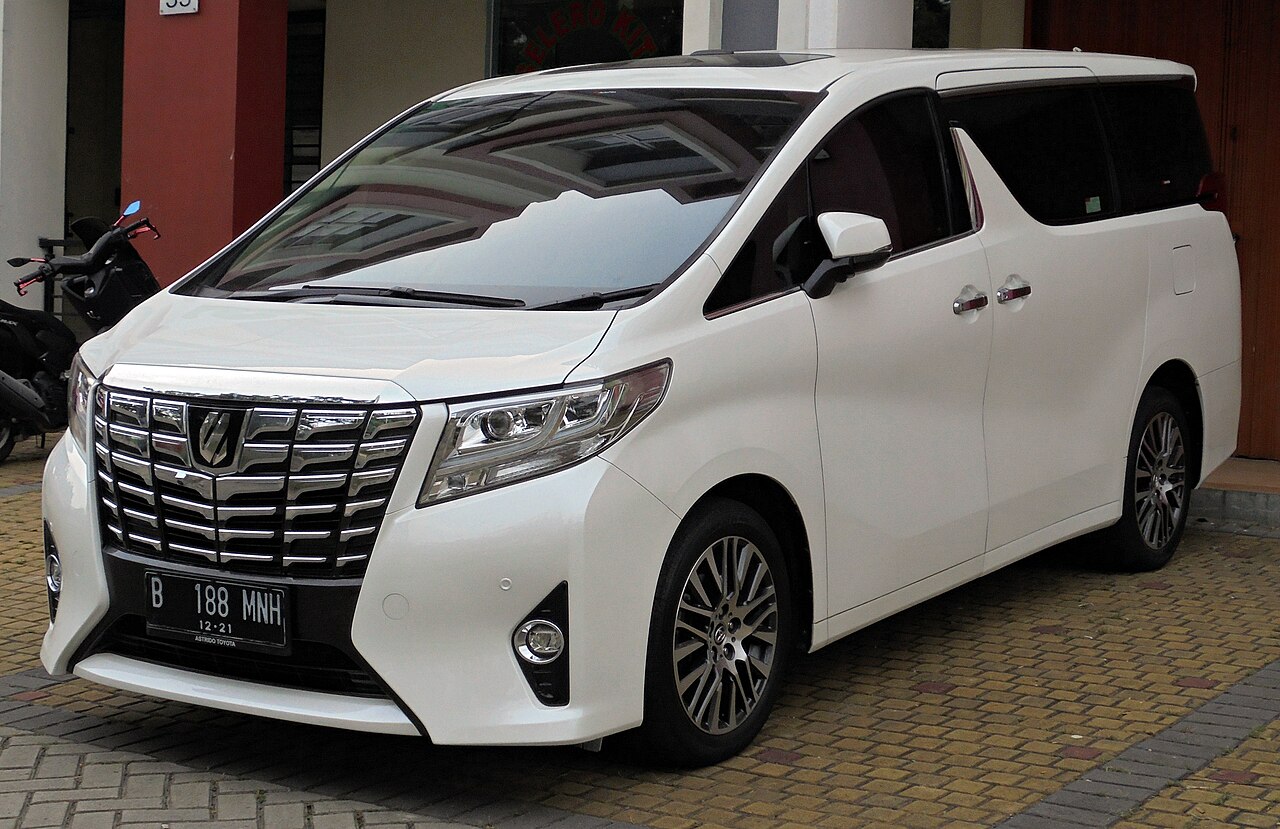
3rd gen AH30 (2015-2023) · Reg 2016–2023
Tap to collapseTap to expand
Generation
3rd gen AH30 (2015-2023) · Reg 2016–2023
Verdict
Hybrid battery SOH is the gen-defining check on 8+ year cars — assume replacement is due if no state-of-health report exists. Test the rear powered sliding doors at viewing (cycle both); failed motors are a known cost. SG-specific: chauffeur-use cars wear rear suspension faster than the odometer suggests.
- Asking
- S$152k–212k
- Median
- S$194k
- Decay
- 8.5%/yr
What's good
- 2.5L petrol non-hybrid with intact powered sliding doors — sidesteps the hybrid-battery story entirely; the 2AR-FE engine is well-regarded. Cycle both doors at viewing — silent, smooth open/close is your signal.
- Hybrid with a recent battery state-of-health (SOH) report on the service book — the THS battery degrades predictably; cars with a recent SOH measurement (and known capacity) let you price the remaining life rather than assume worst-case.
What to watch
- 8+ year hybrid with no HV battery age or SOH stated — a hybrid battery replacement on the AH30 is materially expensive (~S$6-10k); assume it's due unless documented otherwise. Pull the report from Toyota or a hybrid-specialist before negotiating.
- Rear powered sliding doors slow, noisy, or failing to latch — motor or cable assembly is on its way out; per-side repair is well into 4 digits at Toyota labour. A chauffeur-use car often shows this first.
Trims in this generation
Pick a trim to see its score, deal target, and pre-purchase checklist.
ICE
6 trimsGeneration
2nd gen AH20 (2008-2015) · Reg 2009–2015
Tap to collapseTap to expand
Generation
2nd gen AH20 (2008-2015) · Reg 2009–2015
Verdict
Predecessor to the curated Alphard AH30 — uses earlier engine family: 2.4L 2AZ-FE petrol (same as Estima ACR50, carries the rear cylinder-head bolt thread failure), 3.5L 2GR-FE V6 (bulletproof), 2.4L 2AZ-FXE hybrid (early THS-II). Cars are 10-17 years old — all the AH30 buying checks (sliding-door wear, hybrid battery SOH, chauffeur/PHV wear) apply more intensely because of additional age. The 2GR-FE V6 trim is the durable pick across this gen. Hybrid battery is now end-of-life on most cars; pull SOH report or assume replacement is due.
- Asking
- S$82k–166k
- Median
- S$156k
- Decay
- —
What's good
- 3.5L 2GR-FE V6 (Aeras / Royal Lounge G trim) — sidesteps the 2AZ-FE head-bolt story entirely; same bulletproof V6 across Estima ACR50 / AH30 / Camry / RAV4. The durable pick on this gen, especially at 10-17 years old.
- Hybrid with recent reconditioned-pack HV battery installation — most AH20 hybrid batteries are now end-of-life. A car with a recent reconditioned pack (S$3-6k locally) is materially de-risked vs one assuming the original battery still works.
What to watch
- 2.4L 2AZ-FE Alphard with unexplained coolant loss — classic rear cylinder-head bolt thread failure (same as Estima ACR50). The repair requires head removal + thread-repair inserts. S$3-5k locally; walk unless heavily discounted.
- 10+ year hybrid with no HV battery age or SOH stated — battery replacement on the AH20 platform is materially expensive (~S$6-10k for new, S$3-6k reconditioned). Assume due unless documented otherwise.
Trims in this generation
Pick a trim to see its score, deal target, and pre-purchase checklist.
Generation
1st gen AH10 (2002-2008) · Reg 2006–2008
Tap to collapseTap to expand
Generation
1st gen AH10 (2002-2008) · Reg 2006–2008
- Asking
- S$39k–40k
- Median
- S$40k
- Decay
- —
Trims in this generation
Pick a trim to see its score, deal target, and pre-purchase checklist.
Common questions about the Toyota Alphard
- How much does a used Toyota Alphard cost in Singapore?
- Most used Toyota Alphard on the market are around 3 years old, asking roughly S$209k–S$238k (typically about S$219k). That's the age with the widest choice — and the most sellers competing, so it's where you'll have the most room to bargain.
- How much does a used Toyota Alphard depreciate per year?
- A used Toyota Alphard loses value at a fairly steady pace — around 10% a year — with no real plateau. An older one costs less but keeps falling at much the same rate, so there's no single 'bargain age': buy on price and condition, not on timing.
- Is the Toyota Alphard reliable?
- In our read, the Toyota Alphard scores 90 out of 100 on brand reliability. That still varies by generation and how the individual car was looked after, so always check the service history before you commit.
- What should I expect to pay for a used Toyota Alphard with a given mileage?
- It depends on the exact variant, age and mileage — a higher-mileage car should ask less. Use the price modeller on this page to get a fair-price range for a specific age and mileage, so you know what to offer.
- Where do these Toyota Alphard figures come from?
- They're worked out from current used-Toyota Alphard listings in Singapore — asking prices, mileage and registration years — not past transaction prices. We refresh them regularly, and we flag thin data rather than guess.